No. 18 Overall Addie Seal on Her Versatility, Her 33 Offers, and What Will Decide It
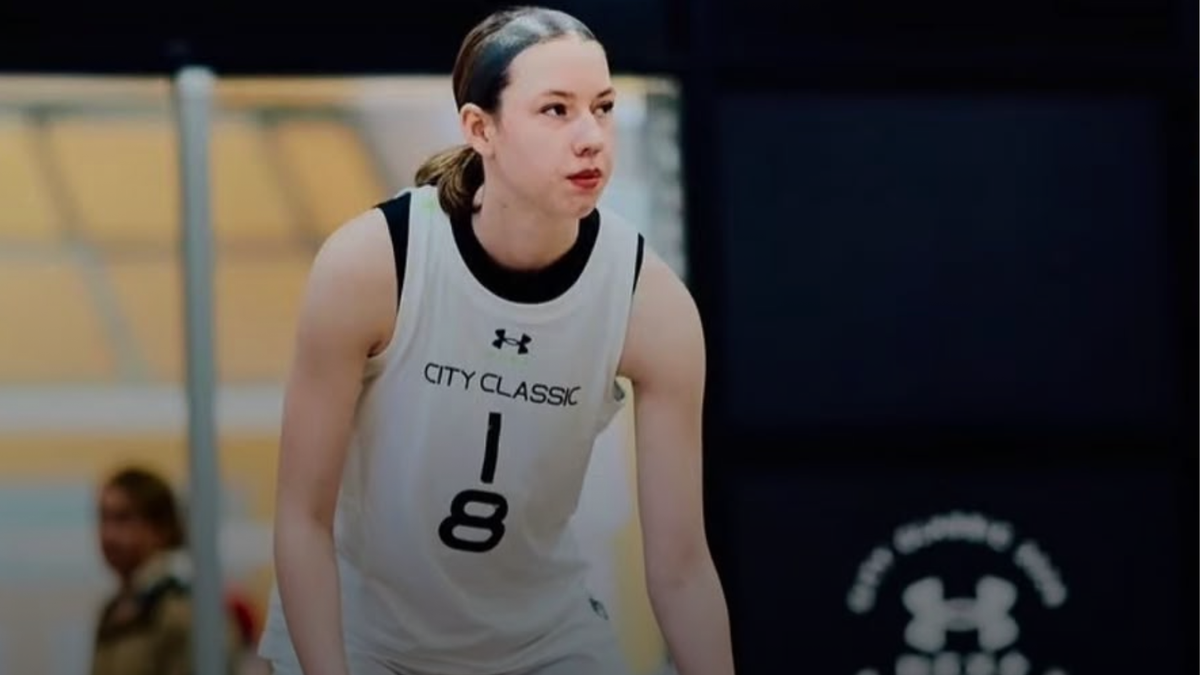
A 6-foot-3 wing who describes herself as a point guard first, with 36 Division I offers spread across seven conferences. She sat down with BTN Scouting to break it all down.
Ask most 6-foot-3 prospects to describe their position and you get a hedge. Ask Addie Seal and you get "point guard/shooting guard" — in that order.
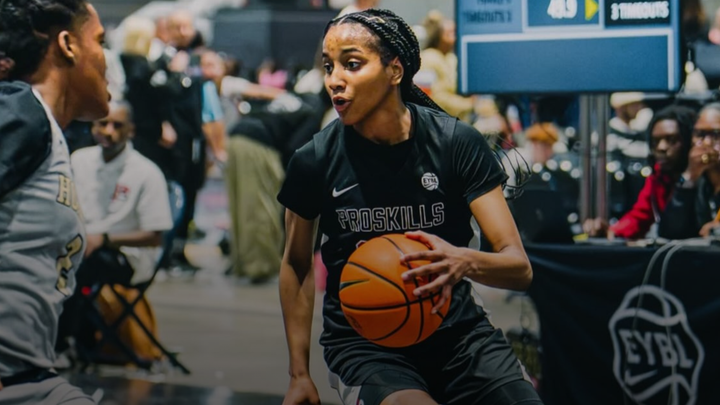
That is the whole scouting report on the No. 18 overall prospect in the BTN Scouting Top 100. Seal has the frame of a forward and the skill set of a lead guard, and she is not interested in splitting the difference. She scores at all three levels, creates for teammates, and guards across positions, which means the questions a staff has to answer are not about what she can do but about which of her tools to build around first.
Thirty-six programs have already decided they want to answer that question. That is the number of Division I offers on her board eleven from the Big 12, nine from the ACC, seven from the SEC, four from the Big Ten, two from the Ivy League, and three more from outside the power structure.
Then there is the piece of her background that explains the rest of it. Seal has been homeschooled since 7th grade.
Read that again, because it is not a scheduling note. It is a rep count. Six years of a schedule built around the gym rather than around a bell, six years of pickup against older players, and thousands of unstructured possessions playing 2s and 3s in the neighborhood. Structured practice teaches players what to do. Unstructured basketball against bigger, older, stronger competition teaches them how to decide. That is the difference between a 6-foot-3 player who can handle the ball and a 6-foot-3 player who can run a team, and it is the most likely explanation for why the basketball IQ keeps showing up in what coaches tell her about her own game.
THE FILE
- Class: 2028 | Position: Wing | Height: 6-foot-3
- School: Homeschooled (since 7th grade)
- BTN Scouting National Rank: No. 18 overall (BTN Top 100)
- Offers: 36 — Big 12 (11), ACC (9), SEC (7), Big Ten (4), Ivy League (2), Pac-12 (2), AAC (1)
- Calling cards: three-level scoring, shooting, positional versatility, basketball IQ, multi-position defense
We caught up with Seal to talk about her game, her recruitment, her visits, and what will ultimately decide where she plays.
How would you describe your game, and what do you bring to the table at the next level?
"I would describe my game as versatile, team-first, and impactful in a variety of ways. As a 6'3" point guard/shooting guard, I can score at all three levels, create for others, and defend multiple positions. Some of the biggest compliments I receive from coaches are about my shooting ability, basketball IQ, versatility, and defense."
The positional self-description is the most important sentence in this interview. Plenty of tall prospects get labeled "versatile" because a staff has not decided what they are yet. Seal is describing the opposite situation a player who has been developed as a guard and happens to be 6-foot-3. Those are two different prospects with two different ceilings, and the second one is far rarer.
Note which compliments she says come from coaches. Shooting, IQ, versatility, defense. Not athleticism, not motor, not raw tools. Those are the four traits that get freshmen minutes, because they are the four that translate immediately without needing a year in a college weight room first.
"A big part of my development comes from being homeschooled since 7th grade. Homeschooling has been a true blessing because it has allowed me to invest extra time into the game I love while also surrounding myself with great mentors and coaches. Since 7th grade, I've consistently played pickup basketball against older players, and growing up I spent countless hours playing 2s and 3s with my neighbors. Those experiences taught me how to think about the game, make quick reads, communicate, and compete against different styles of players."
This answers the question every staff asks about a homeschooled prospect. The concern is always competition level and structure. Seal's answer reframes it the extra time was not spent in isolation, it was spent against older players in games where nobody was calling plays for her. Small-sided basketball is a decision-making accelerator. Every possession of 2s and 3s is more touches, more reads, and more consequences than a possession of five-on-five.
"I take a lot of pride in being a student of the game. I enjoy learning, picking up concepts quickly, and understanding what is needed to help my team succeed. Even on nights when my shot isn't falling, I know I can still affect the game through my defense, effort, communication, and willingness to do whatever my team needs."
That last line is the one to circle. A scorer who knows how to be useful without scoring is a player a coach can leave on the floor through a bad shooting night. For a prospect whose primary calling card is shooting, having a stated second and third way to affect a game is what separates a high-major starter from a high-major streak.
Which schools are currently recruiting you?
"I have been fortunate to build relationships with a number of great programs throughout the recruiting process. Some of the schools that have been consistently recruiting me include Oklahoma State, Texas Tech, Houston, Tulsa, Clemson, Georgia Tech, Harvard, Oregon, Virginia Tech, SMU, Wisconsin, Oklahoma, Alabama, Mississippi State, Arizona State, Virginia, Iowa State, Iowa, LSU, Washington, Tennessee, Michigan, and Duke."
Her offer sheet runs deeper than the programs she named. The full list sits at 36: Arizona, Arizona State, Arkansas, Alabama, Auburn, Boston College, Cal, Clemson, Colorado, Columbia, Georgia Tech, Harvard, Houston, Iowa State, Kansas State, Michigan State, Mississippi State, Missouri, North Carolina, Northwestern, Oklahoma, Oklahoma State, Oregon, Pitt, SMU, TCU, Texas A&M, Texas State, Texas Tech, Tulsa, UCF, Utah State, Virginia, Virginia Tech, West Virginia, and Wisconsin.
Thirty-six offers, and the shape of that board tells the story better than the count does.
The Big 12 is the engine of this recruitment. Eleven offers Arizona, Arizona State, Colorado, Houston, Iowa State, Kansas State, Oklahoma State, TCU, Texas Tech, UCF, and West Virginia. That is not just a lot of programs, it is a third of an entire conference chasing the same wing. When one league gets this saturated on a single prospect, it usually means the film travels well in a specific style of play, and the Big 12's pace and spacing fit a 6-foot-3 player who can put it on the floor.
The ACC is nine deep and it is the strongest collection of brands on the board. North Carolina, Virginia, Virginia Tech, Boston College, Pitt, SMU, Cal, Clemson, and Georgia Tech. North Carolina's involvement is the ceiling marker of that group that staff does not spend early offers on projects.
Seven SEC offers, and the regional core sits inside them. Oklahoma, Texas A&M, Arkansas, Alabama, Auburn, Missouri, and Mississippi State. Oklahoma, Texas A&M, and Arkansas are the ones to watch closely proximity plus the deepest league in women's basketball is a hard combination to recruit against.
Four Big Ten offers, and Oregon is the newest name on the board. Wisconsin, Northwestern, Michigan State, and Oregon give her a foothold in a league that has become a haven for skilled, positionally flexible wings. Oregon is worth its own mention: Seal named the Ducks as a program consistently recruiting her, and they have since converted that relationship into an offer. That is the clearest example of momentum on this entire board.
Two Ivy League offers, and they matter more here than they would in most recruitments. Harvard and Columbia both being in means the academic profile is real and given how much weight Seal places on academics later in this same interview, that lane cannot be dismissed as a formality.
The interest tier is where this gets most interesting. Seal named Iowa, LSU, Washington, Tennessee, Michigan, and Duke as programs consistently recruiting her none of which appear on the offer sheet yet. Six high-major staffs putting in relationship work before pulling the trigger is a specific signal: those are the programs still doing evaluation, and they are the most likely names to change the shape of this board over the next twelve months. Watch Duke and Tennessee in particular.
One more read on the board. Thirty-six offers spanning seven conferences and both coasts means no program has geography, no program has exclusivity, and no program has a head start. That is a recruitment fought entirely on relationships and development which, as her answers below make clear, is exactly the ground she wants it fought on.
What unofficial or official visits have you already taken?
"I haven't taken many visits yet, but the opportunities I've had to get on campus have been valuable. One thing that has stood out to me is how different every program's culture, coaching style, and team dynamic can be. The biggest takeaway for me has been the importance of relationships."
The timeline here is deliberate, not passive.
Seal has been on campus enough to learn what she is looking for and not enough to have narrowed anything. That is the right sequencing for a 2028 early visits should be about calibration, not commitment, and the takeaway she named (that the people inside a program matter most) is the kind of conclusion you can only reach by comparing two or three environments side by side.
Do you have any upcoming visits planned?
"Right now, I don't have any visits officially planned. I'm still taking my time throughout the recruiting process and trying to learn as much as I can about each program, coaching staff, and school."
No scheduled visits is the single most important logistical detail in this piece.
It means the board is fully open. There is no visit weekend on the calendar functioning as a soft deadline, no program with the built-in advantage of going last, and no momentum anybody can point to. For the 36 staffs holding offers, the message is that the evaluation phase of this recruitment is still the relationship phase and the first program to get her on campus for an official has a meaningful window to define the standard everyone else gets measured against.
What factors will play the biggest role in your college decision?
"The biggest factor is relationships. I value genuine connections with the coaching staff and enjoy building relationships with multiple coaches within a program. One thing that really stands out to me is when coaches remember details from previous conversations, check in on my family, or ask about things going on outside of basketball."
Pay attention to "multiple coaches within a program."
That phrase should change how staffs approach this recruitment. Seal is not describing a bond with one lead recruiter she is describing a program-wide relationship, which means assistants and support staff are part of the evaluation, not accessories to it. Recruitments won this way are also recruitments that survive a staff change. Programs where one coach carries the entire relationship are the programs most exposed here.
The detail about coaches remembering previous conversations is a specific, testable standard. With 36 offers on the table, it is also the most efficient filter she could have chosen. It rewards the staffs doing real work and quietly eliminates the ones running a script.
"Player development is also very important to me. I want to be in an environment where I am challenged every day and surrounded by people who will help me continue growing as a player and as a person."
A player who asks to be challenged is a player who can be coached hard. For a prospect this decorated this early, that matters. Development-first programs with a track record of turning skilled wings into complete players should feel encouraged by this answer and it is the argument the mid-major and Ivy staffs on her board can actually win with.
"Academics will be another major factor. Basketball won't last forever, so I want to attend a school that provides strong academic resources, support systems, and opportunities that will prepare me for life beyond the game."
This is where Harvard, Columbia, Northwestern, Virginia, and North Carolina all get real. Combine it with the homeschooling background six years of a self-directed academic schedule and you have a prospect likely to evaluate academic support with more scrutiny than most.
"As for location, I don't think distance from home will be a deciding factor. Wherever I choose to go will become my next home, and I am incredibly fortunate to have a family that supports me no matter where my journey takes me."
And that removes the last constraint.
Geography is the factor that quietly eliminates half of most recruitments. Seal has taken it off the table, which is exactly why a board that runs from Cal to Boston College to Arizona can stay this wide. Nobody wins or loses this one on a map.
Final Thoughts
Addie Seal has the two things that cannot be taught. She is 6-foot-3, and she thinks like a guard. Everything else on her profile the three-level scoring, the multi-position defense, the shooting coaches keep complimenting sits on top of that combination and gets more valuable because of it.
What raises the projection is where the IQ came from. Six years of homeschooling built around the gym, thousands of possessions against older players, and a self-description that leads with playmaking rather than size. Prospects with her length usually spend their first college year learning how to play. Seal has already done that part.
Thirty-six Division I offers. Eleven from the Big 12, nine from the ACC, seven from the SEC, four from the Big Ten. Two Ivy League programs. Six more high-majors Duke, Tennessee, LSU, Iowa, Washington, and Michigan recruiting her without an offer on the table yet. Zero visits scheduled and geography off the table. No. 18 overall in the BTN Top 100.
This recruitment is not close to decided. It is close to wide open and that is a very different, and much more dangerous, thing for the programs chasing her.
Comments ()